30–53%
of treated water lost to leaks before billing, across African utilities
Maayan · Cameroon
Maayan pairs low-cost solar sensors with AI to find water leaks and flowing unregistered taps, and to serve utilities, residents, and a government regulator portal from the same data. The sensors don't just detect leaks — they also proactively predict leak tendency well before a leak happens, from asset condition and live hydraulics.
The problem
30–53%
of treated water lost to leaks before billing, across African utilities
$800M
estimated annual continental loss (African Water Association, 40 countries)
53%
of CAMWATER's own production reported lost (Director General, 2023)
42
leaks found in a single overnight patrol, Douala, January 2025
Citizens — disproportionately women and girls — spend hours daily locating taps that are actually flowing, with no real-time information system to guide them.
The solution
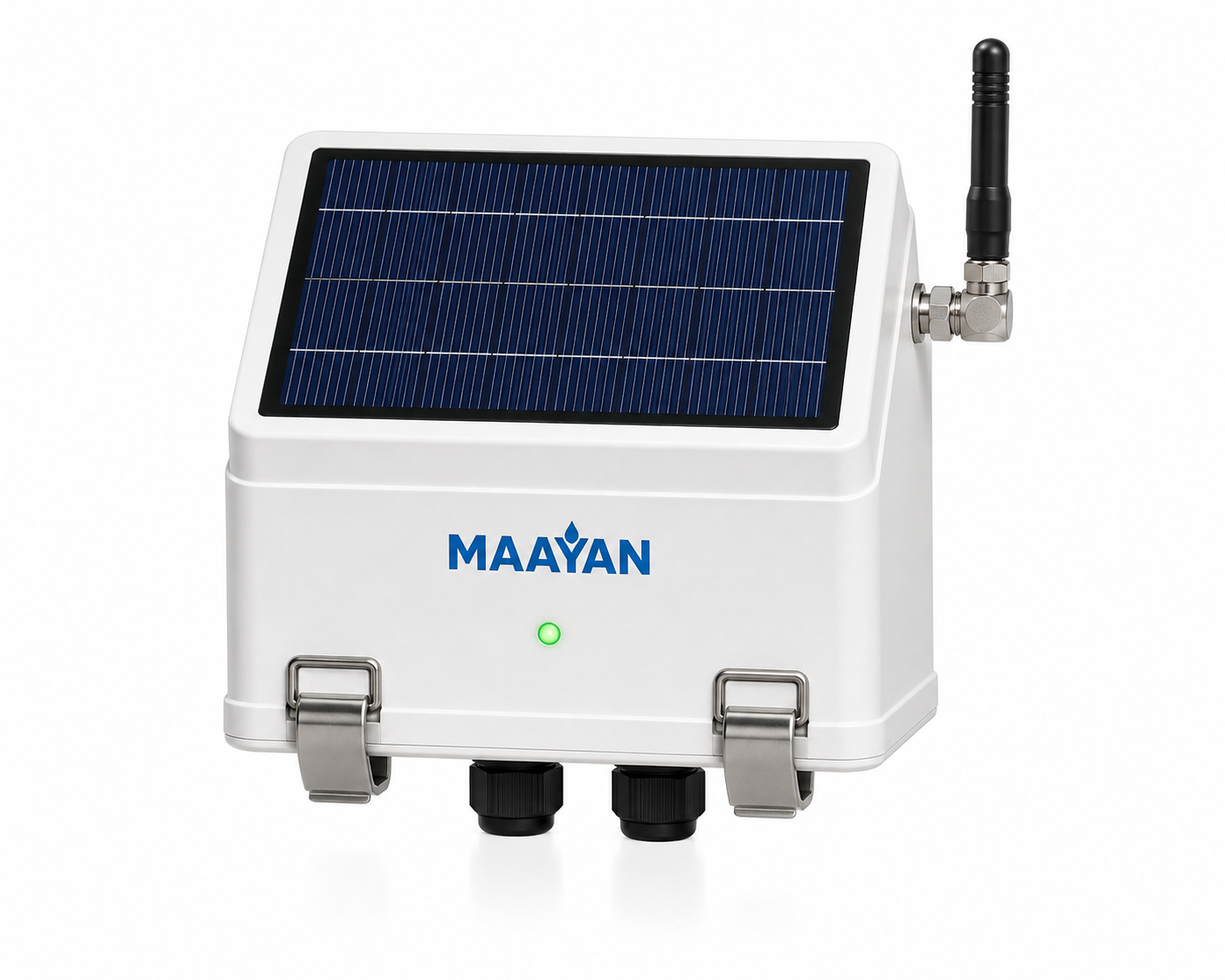
Solar-powered pressure sensor nodes, clamp-on installation, LoRaWAN communication — no SIM card, no monthly data cost.
An AI system trained on tens of thousands of simulated leak scenarios detects and localises leaks in real time. The same pressure tendencies across the network also flag illegal water consumption: a flowing unregistered tap leaves a detectable pressure signature. The sensors don't just detect leaks — they also proactively predict leak tendency well before a leak happens, combining surveyed asset condition (age, material, wall thickness) with live hydraulic stress, so crews can target the most at-risk pipes. That ranking is relative, not a calendar forecast of when a pipe will break.
A cloud platform serves many utilities from one system — plus a free layer that keeps residents informed, and a government and regulator portal for summary-level oversight. Operators can enter surveyed pipe records so leak-tendency ranking stays tied to the network they actually run.
Oversight
A ministry or regulator can view a summary of what is happening across the utilities registered under their jurisdiction — a country, or a state or region — without opening each utility's operational dashboard. That summary can include how many pipes sit at high leak tendency. The portal is distinct from the utility-facing dashboard and from the citizen-facing layer. It is a third output from the same sensor data: secure, discreet, and summary-level.
How it works
Step 1
A solar-powered node periodically reads water pressure in the pipe.
Step 2
The sensors don't just detect a leak or a flowing unregistered tap. They also proactively predict leak tendency well before a leak happens, from asset condition and live hydraulics.
Step 3
Location, estimated size, and duration are sent to on-call operators — along with which pipes rank highest for leak tendency.
Step 4
The same day, a live map, WhatsApp, or SMS shows which nearby tap is flowing.
Our network
Partners and institutions standing with us as we bring affordable water intelligence to African utilities and the communities they serve.
Recognition
AMCOW · IRC WASH
August 2026 · KigaliSelected as an innovator for the symposium convened by the African Ministers' Council on Water (AMCOW), hosted by the Government of Rwanda, facilitated by IRC WASH (Kigali, August 2026).
IAHR Africa Congress
December 2026 · KigaliMaayan's technical approach accepted for oral presentation at the 7th IAHR Africa Congress 2026 (Kigali, December 2026), hosted by the University of Rwanda.
AMCOW · IRC WASH
August 2026 · KigaliSelected as an innovator for the symposium convened by the African Ministers' Council on Water (AMCOW), hosted by the Government of Rwanda, facilitated by IRC WASH (Kigali, August 2026).
IAHR Africa Congress
December 2026 · KigaliMaayan's technical approach accepted for oral presentation at the 7th IAHR Africa Congress 2026 (Kigali, December 2026), hosted by the University of Rwanda.
AMCOW · IRC WASH
August 2026 · KigaliSelected as an innovator for the symposium convened by the African Ministers' Council on Water (AMCOW), hosted by the Government of Rwanda, facilitated by IRC WASH (Kigali, August 2026).
IAHR Africa Congress
December 2026 · KigaliMaayan's technical approach accepted for oral presentation at the 7th IAHR Africa Congress 2026 (Kigali, December 2026), hosted by the University of Rwanda.
AMCOW · IRC WASH
August 2026 · KigaliSelected as an innovator for the symposium convened by the African Ministers' Council on Water (AMCOW), hosted by the Government of Rwanda, facilitated by IRC WASH (Kigali, August 2026).
IAHR Africa Congress
December 2026 · KigaliMaayan's technical approach accepted for oral presentation at the 7th IAHR Africa Congress 2026 (Kigali, December 2026), hosted by the University of Rwanda.
Track record
Maayan is a Cameroonian company. The milestones below are the ones this site already states. Linked pages are official event or programme sites. They describe those events; they are not, by themselves, articles about Maayan.
Track record →FAQ
Answers stay inside what this public site already states. Where a figure is not published — including a CFA price for 20 nodes — we say so.
FAQ →Interested in a pilot, a partnership, or press inquiries?